
To design our economy around care, we need to be able to understand how we all care for each other. This requires us to engage with what data we collect, how we report it and to evaluate the role of evidence in enabling or stalling a new economic paradigm. That’s why we’re on a mission to shape better data about care.
The case for better data
At Care Full, we want to be part of a future economy which actively enables us to care for ourselves, each other and the planet. This is a contrast to our current economic model which individualises care and forces it behind closed doors and into the margins. In this current model care is poorly represented in data about our economic and political lives. This leaves our understanding of care and its relationship with the systems that surround us stuck in the past, defined by metrics which no longer represent the breadth of experience of care.
So, we’re launching a new campaign to ensure that our data infrastructure gives us the evidence we need to make change happen. Over the coming months, we’ll be exploring the data that’s already out there about care, and co-designing alternatives with those who care. We’re excited to be supported by Connected by Data in this journey and to work alongside four other community data campaigns as part of their new cohort.
Our starting point
Data on our labour market acts as an important case study on the shortcomings of the representation of care in data about our economy. Quarterly data tables on the labour market are often used as a barometer for the health of our economy and extensively covered in the news.
But this data typically only includes the main ‘economic activity’ people take part in. That means if you work and care, study and care or are out of work because of a long term health condition whilst also caring, then the care you give might not be captured in the data.
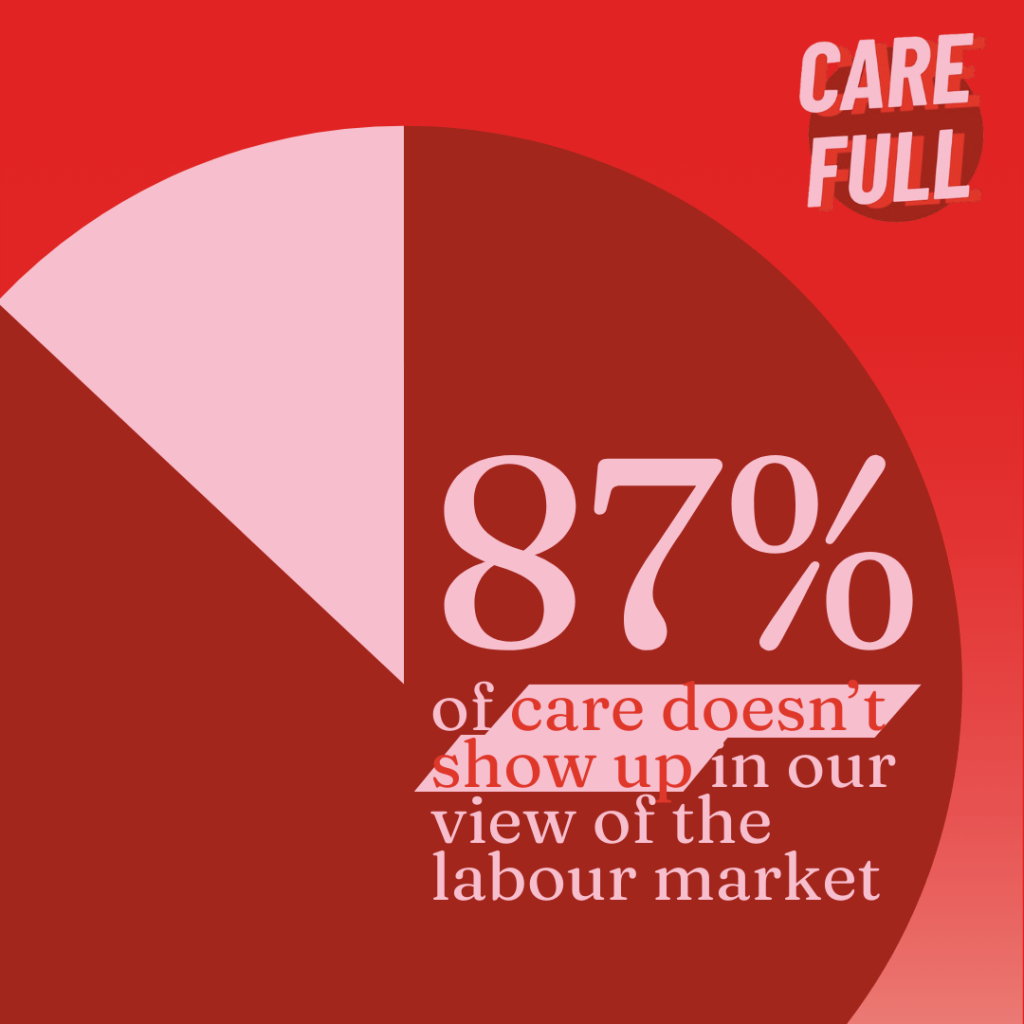
According to the 2021 census, just 13% of people who care also call this their main activity. So, 87% of those who care do not have this part of their lives represented in data about our labour market. But that doesn’t mean that care doesn’t have a relationship with their work or other activities.
Further, labour market data defines the care that is counted as ‘looking after the family and home’. This is a framing that has been used for decades but bears little resemblance to the diversity of care we all give. This risks underreporting for those who don’t see themselves in such a label.
Again, comparing this framing to census data on care, we know that only 27% of those who say their main activity is looking after the family and home are themselves unpaid carers. This means the category picks up lots of different experiences, including childcare, which can make this data is hard to interpret or act on.
Starting to make care count
This is just one example of the ways in which data shapes – and limits – our understanding of care in relation to the economy and the world around us. To truly centre care, we need data that reflects care as it is, not just in the boxes we think are easiest to handle. Over the coming months we’ll be exploring this further. If you’re interested in being part of the work or are taking on similar questions we’d love to hear from you!
 Care Full
Leave a comment